By Karalee Greer | Brainnovation Network | April 11, 2026
After looking into the claim that racket sports might be linked to longer life, I found myself more interested in a different question. What is it about these activities that could make them so beneficial in the first place?
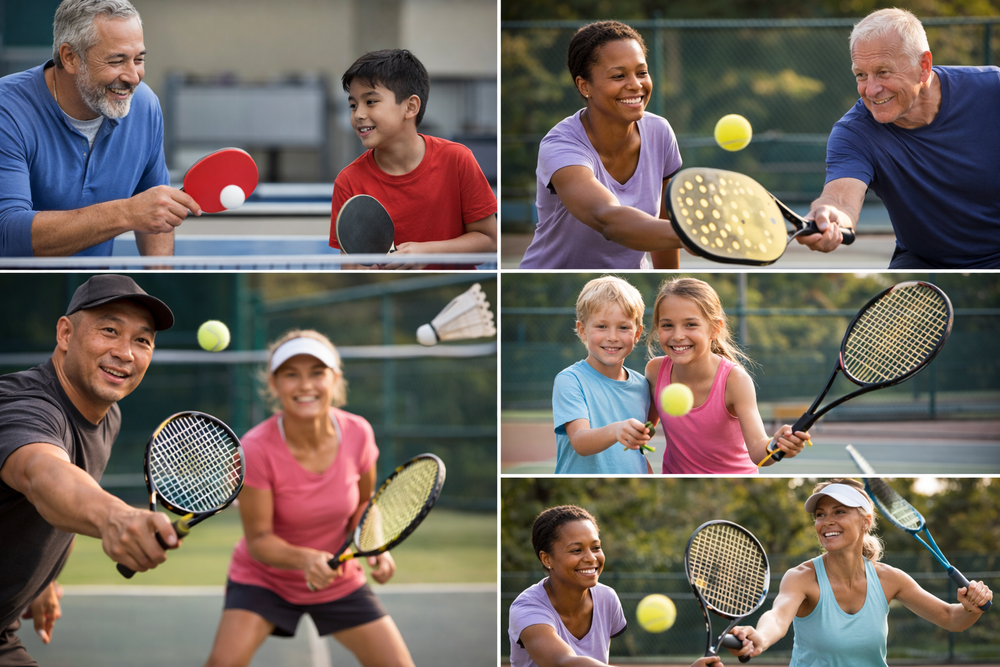
At a basic level, all exercise supports brain health. But not all forms of movement engage the brain in the same way. What stood out to me about racket sports like tennis, pickleball, and badminton is how many systems they activate at once.
You’re not just moving. You’re reacting.
There’s constant decision-making, tracking, timing, and adjusting. You’re reading your opponent, anticipating where the ball will go, and choosing how to respond, often in a matter of seconds. It’s physical, but it’s also highly cognitive.
From what I’ve been reading, that combination seems to matter.
A large cohort study published in the British Journal of Sports Medicine found that different types of physical activity are associated with different health outcomes, including reduced risk of cardiovascular disease and all-cause mortality.
https://doi.org/10.1136/bjsports-2016-096822
What’s interesting is that activities involving coordination and interaction, not just repetition, appear to offer broader benefits. It makes intuitive sense when you think about how the brain works.
Movement alone supports circulation and overall brain health. But when you layer in coordination, timing, and strategy, you’re engaging additional brain regions involved in executive function, motor control, and spatial awareness.
And then there’s the social element. Most racket sports are played with or against other people. There’s communication, shared focus, and a kind of natural accountability. You show up not just for the activity, but for the interaction.
That combination, physical, cognitive, and social, seems to create something different from more solitary or repetitive forms of exercise.
What stood out to me is that this isn’t about intensity or performance. It’s about engagement. You’re present. You’re thinking. You’re reacting. And often, you’re enjoying it enough to come back and do it again. That last part may be more important than it sounds.
Consistency is one of the hardest things to maintain when it comes to health. Activities that are enjoyable, social, and mentally engaging may be easier to stick with over time. So while it’s tempting to focus on which exercise is “best,” what this really points to is something broader.
The brain seems to benefit from activities that combine movement with interaction and attention.
And racket sports just happen to bring those elements together naturally.
Series Note
This article is part of the Do Some Activities Really Add Years to Your Life? A Closer Look at Brain Health and Longevity series.
Editor: Karalee Greer LinkedIn: https://www.linkedin.com/in/karalee/
Tags: #Karalee Greer #Brain Health #Neuroscience #Cognitive Function #Exercise & Longevity #Brainnovation Network